Carbon
Category
Fintech
Carbon is a digital micro-finance banking app that makes financial services faster, cheaper, and more convenient. Users can access the app 24/7 from anywhere in the world.

Overview
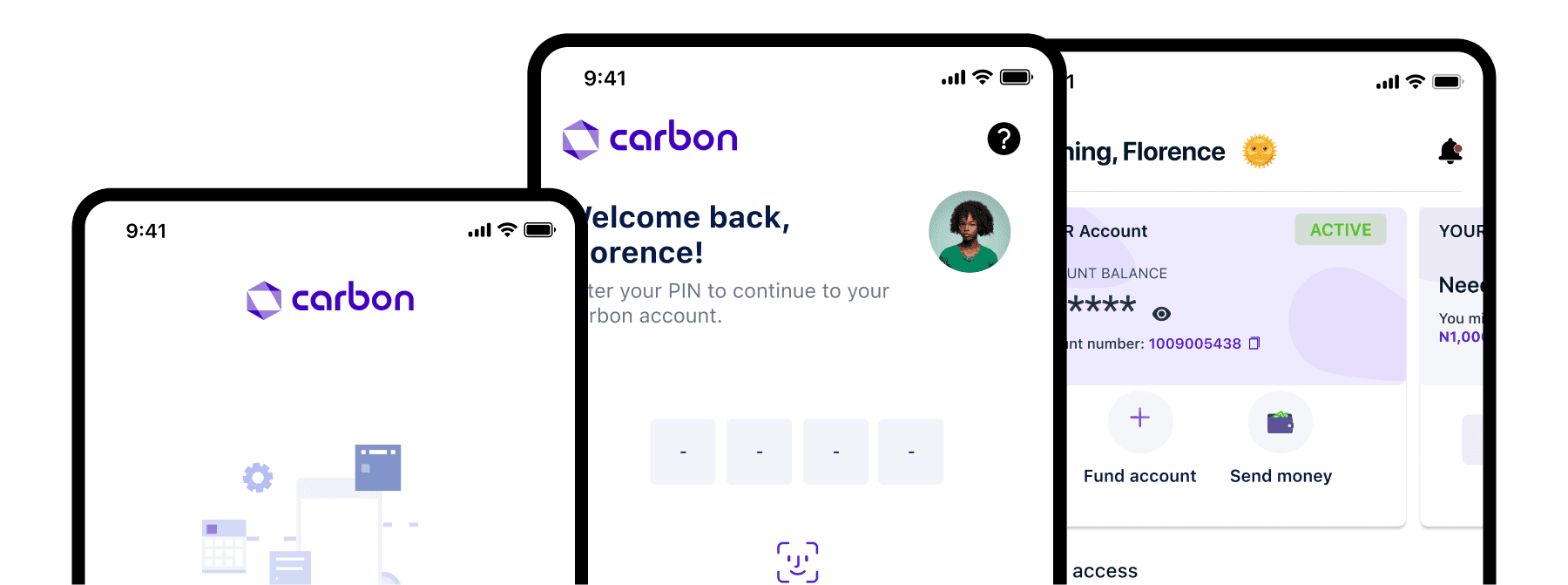
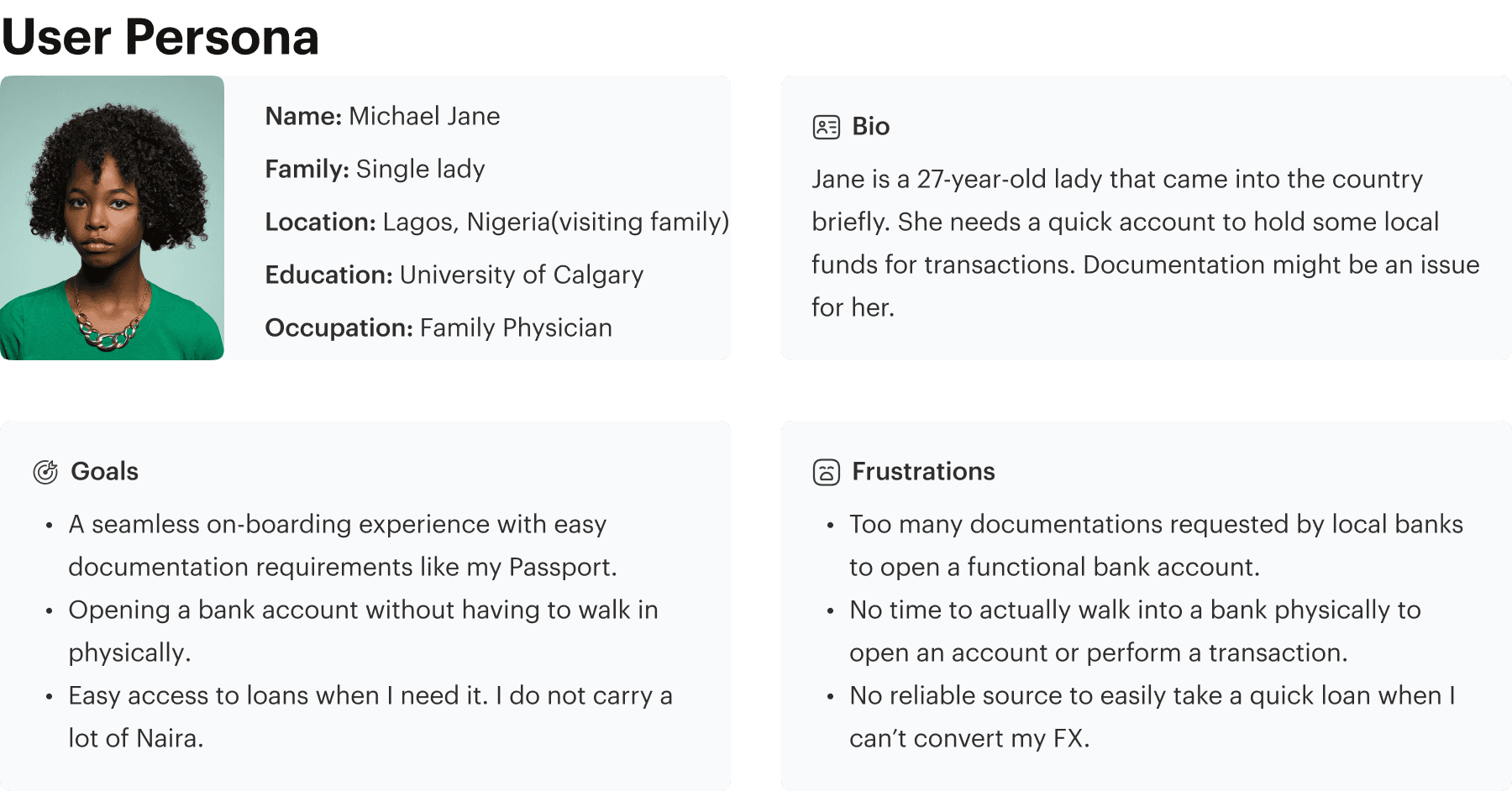
Carbon is a digital micro-finance banking app which houses a number of other financial products. Users can open bank accounts and have access to loans, savings, airtime, TV subscription and bill payment, BNPL(buy now, pay later) and debit card services. My role is to majorly improve users experiences across On-boarding Payment, Savings, Cards, Carbon Zero, Bill payment & Airtime/subscription purchase. Design decisions here were driven by direct user research — interviews, usability testing with recruited users across device tiers, and documented findings shared with PMs and engineers — not internal assumptions.
Goal
The business wants to increase the onboarding rate, disburse more loans and re-evaluate the entire app to have a new interface and better experience. Also improve the onboarding process for new design hires, this means an industry standard design system and proper documentations of the design as there were some existing screens live on the app that didn’t exist on the Figma board.
Problem
The Carbon mobile app had quite a number of key issues. The user interface of the entire application didn’t look modern nor intuitive, it lacked some necessary features, it had a lot of user journey issues in onboarding and no proper guide for users within the app for issues like KYC specific requirements(customer service is always bugged with tickets). As a result, the users had a painful experience navigating the app.
The Approach
The Carbon team is pretty Agile. For my role, my focus is on the product design improvements, new feature requests, new user interface and a better user experience on the native iOS and Android mobile applications for On-boarding, Payment, Savings, Cards, Carbon Zero, Bill payment, Airtime and TV subscription purchase. I also contribute to the design system which a team of 3 designers work with.
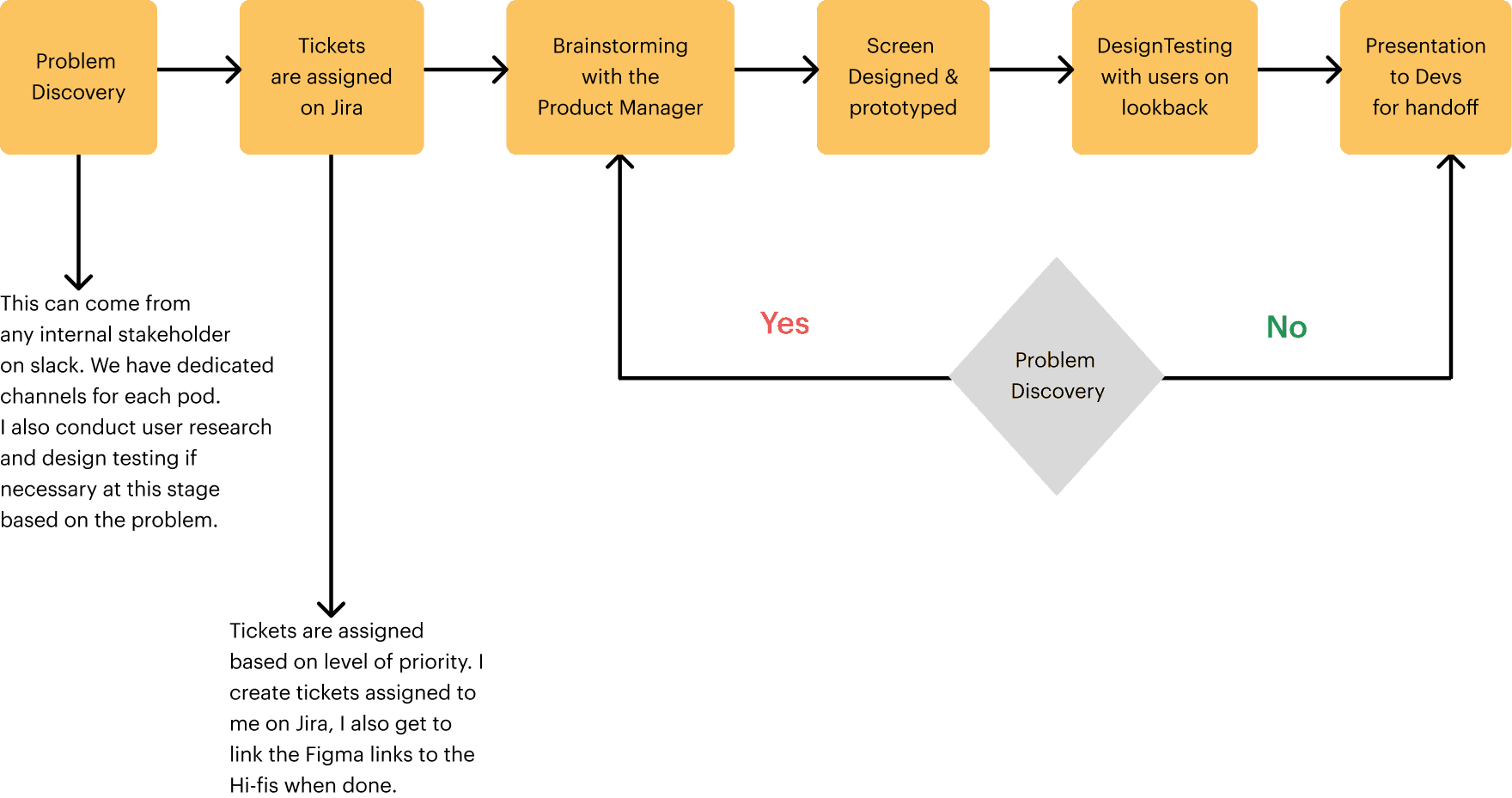
For a typical Feature request, here’s how the design process flows
Research - Insight - Impact
Based on the problem being fixed. The research and test being carried out varies. I once interviewed existing users of one of the products called Carbon Zero which was a new product. I interviewed users and stakeholders. I went deeper about this in my other case study called Carbon Zero. I carried out some design testing on Carbon mobile app which involved recruiting 3 users to test the new design prototypes.
User A was a high end iPhone user who is highly tech savvy
User B was a mid range iPhone user who is not so tech savvy
User C was a low end Android user who is not tech savvy
I hosted several sessions with them on Google meet & documented all these experiences on Confluence to share with the team. We then schedule meet sessions with PMs, Engineers to discuss about all the issues raised and create tickets from there.
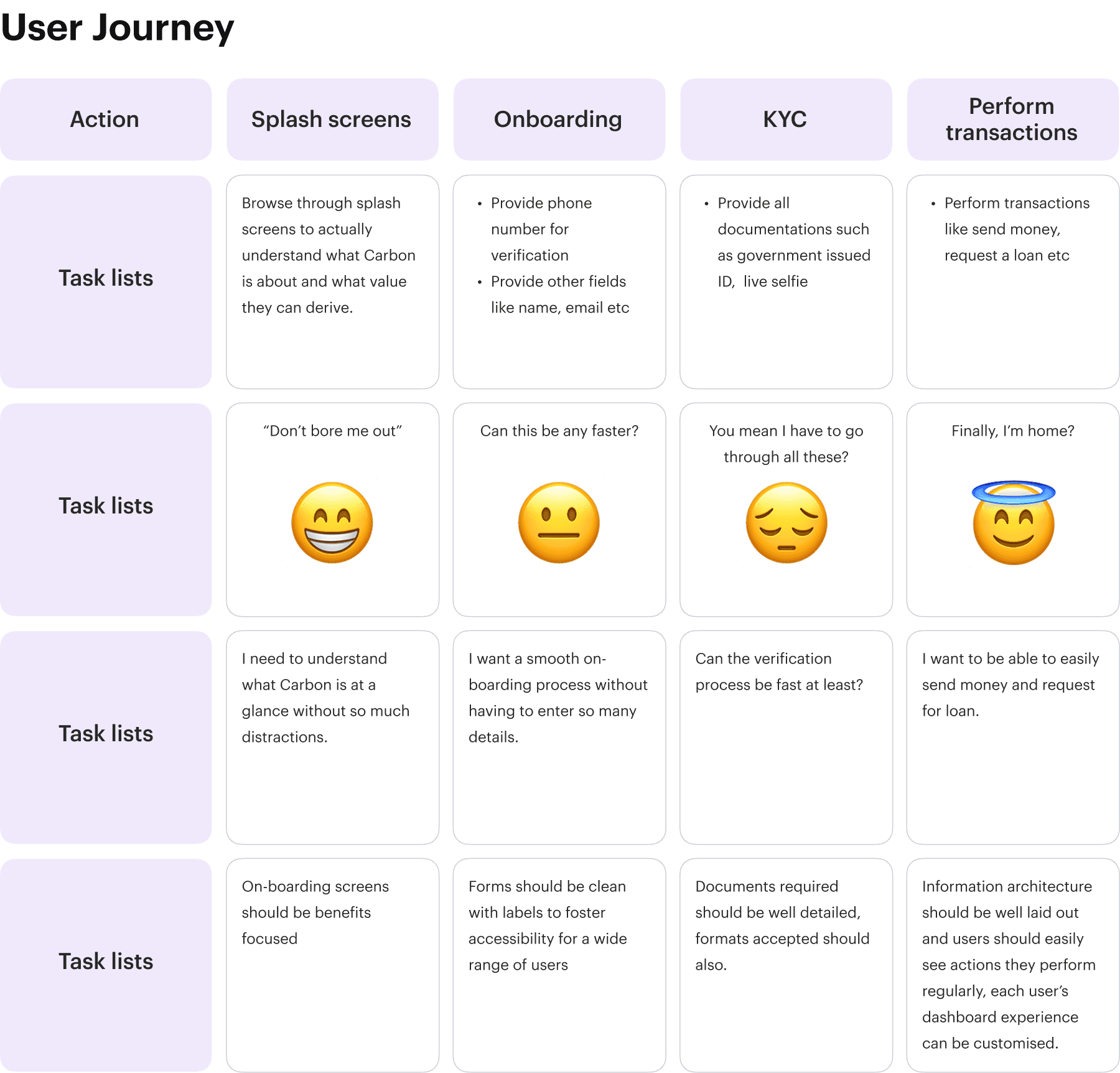
For the purpose of this case study, I will be highlighting some of the core pain points of the Carbon Application users for our on-boarding process. A lot of these issues have however been fixed. We wanted a lot of the users to upgrade from one KYC level to the other and they had to perform some tasks including email verification, live selfie upload etc.
1. Long registration Process
“The registration process is too long, some screens can be merged e.g the email verification page. 6 pages for signup is too much”
“After entering my email and waiting for the confirmation email to drop. I get the welcome to carbon screen, after clicking next it brings me back to enter your email page”
2. Awful selfie upload process
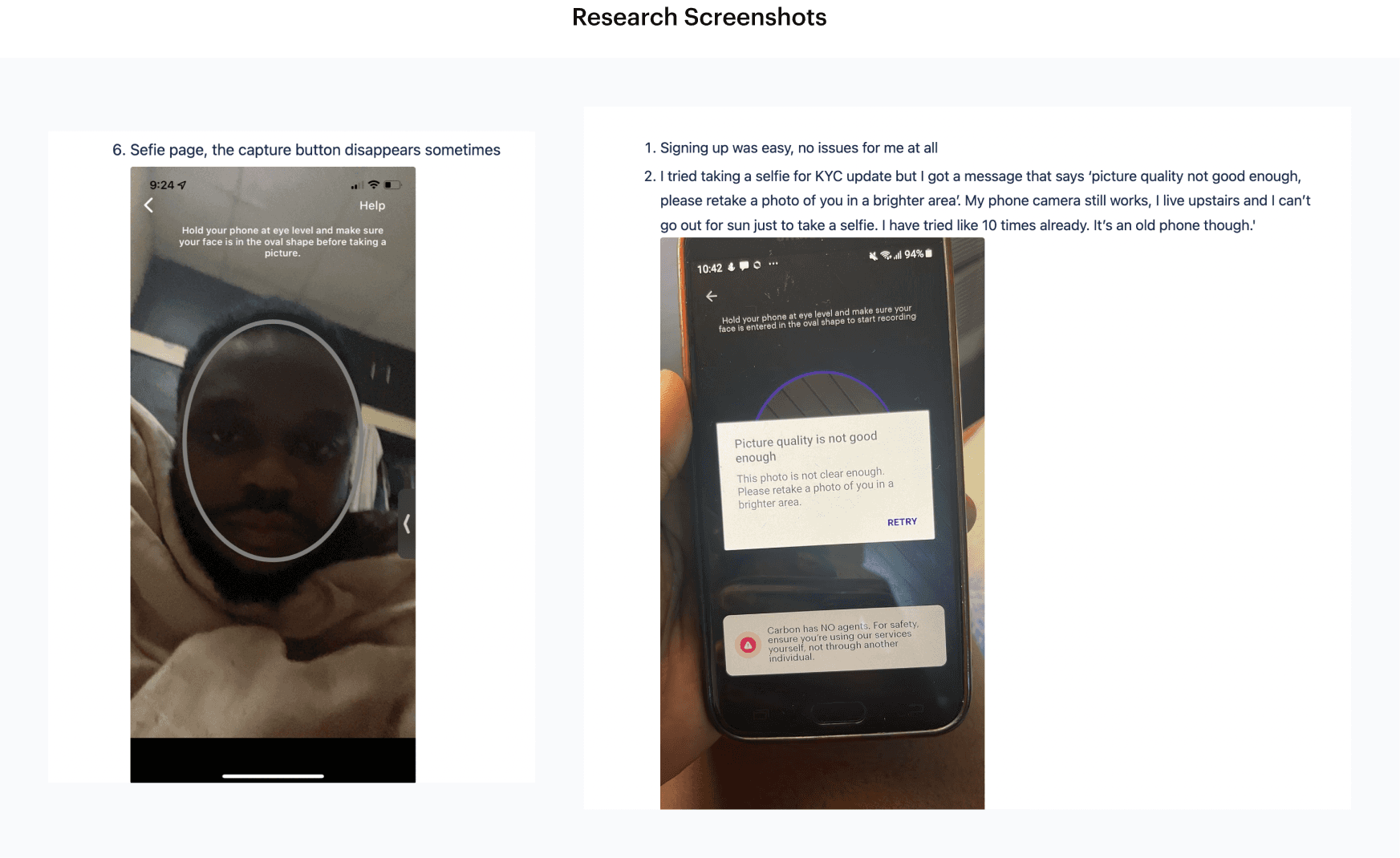
“Sefie page, the capture button disappears sometimes”
“All of a sudden the selfie is now accepted. If it’s processing, a loader can be shown pending when the result is received”
“After waiting for 5mins, had to restart the app, then selfie isn’t saved anymore *covers face sighing”
“Trying to capture selfie now, crashed the app, app just keeps crashing”
“Now I tried to login back and seeing one of the many pictures taken as my profile pic, how?”
3. Unable to take Selfie on low-end android
“I tried taking a selfie for KYC update but I got a message that says ‘picture quality not good enough, please retake a photo of you in a brighter area’. My phone camera still works, I live upstairs and I can’t go out for sun just to take a selfie. I have tried like 10 times already. It’s an old phone though”
4. App freezing
“On first attempt, the verification email did not work. The app froze, I had to restart the app to finish up the email verification aspect”
Key insights
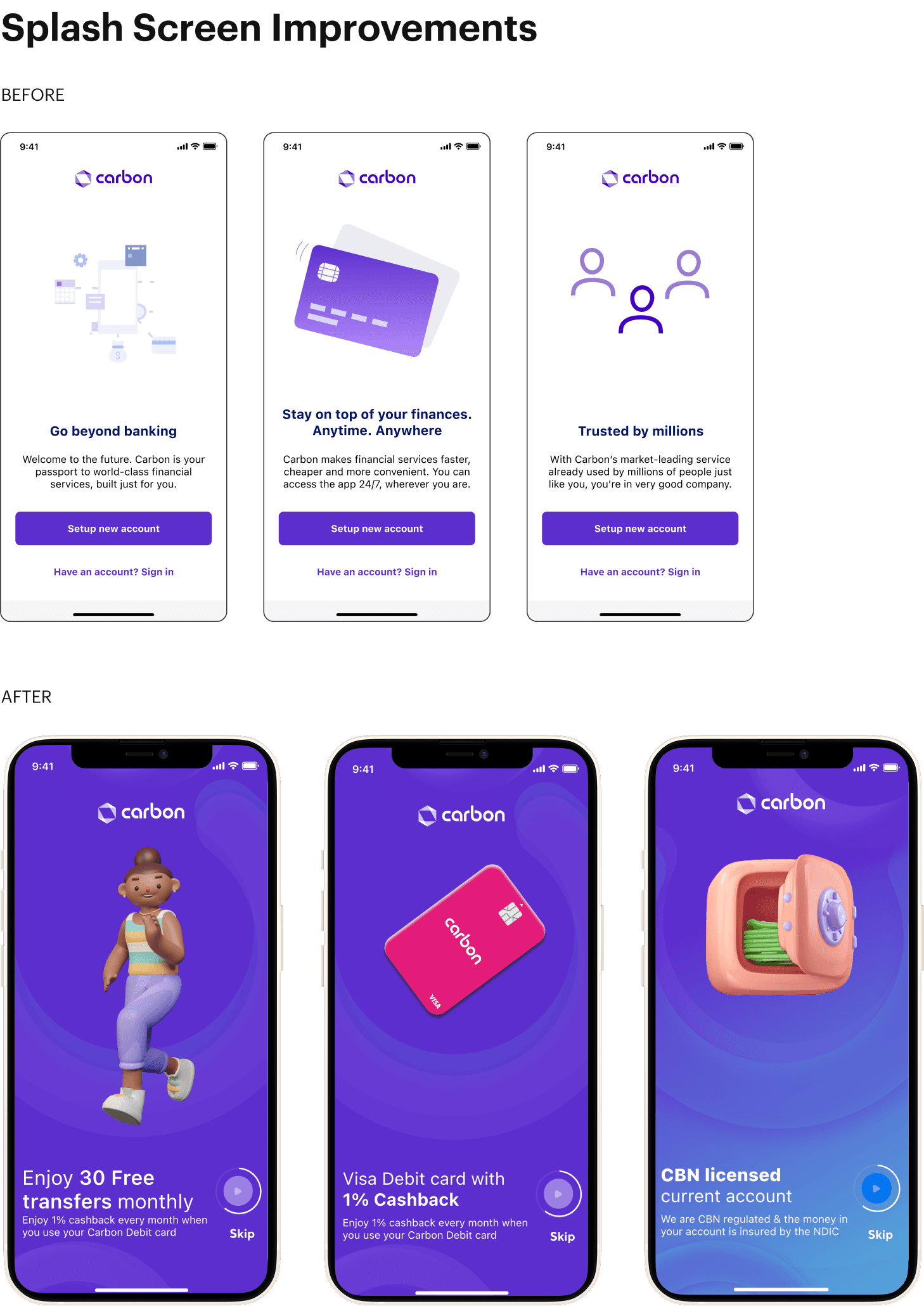
Old screens were not really benefit focused and some UX copies were a bit vague. New copies are more specific and explicit about the value user will be getting by signing up.
Old screens are also somewhat carrying ‘stale designs’ . They cannot be compared with designs from carbon’s close competitors like Kuda.
Old screens do not have any form of animation to keep users engaged, new designs are well animated to keep users engaged.
Users now have a progress bar to give them a feel of how long the process will take.
Key insights
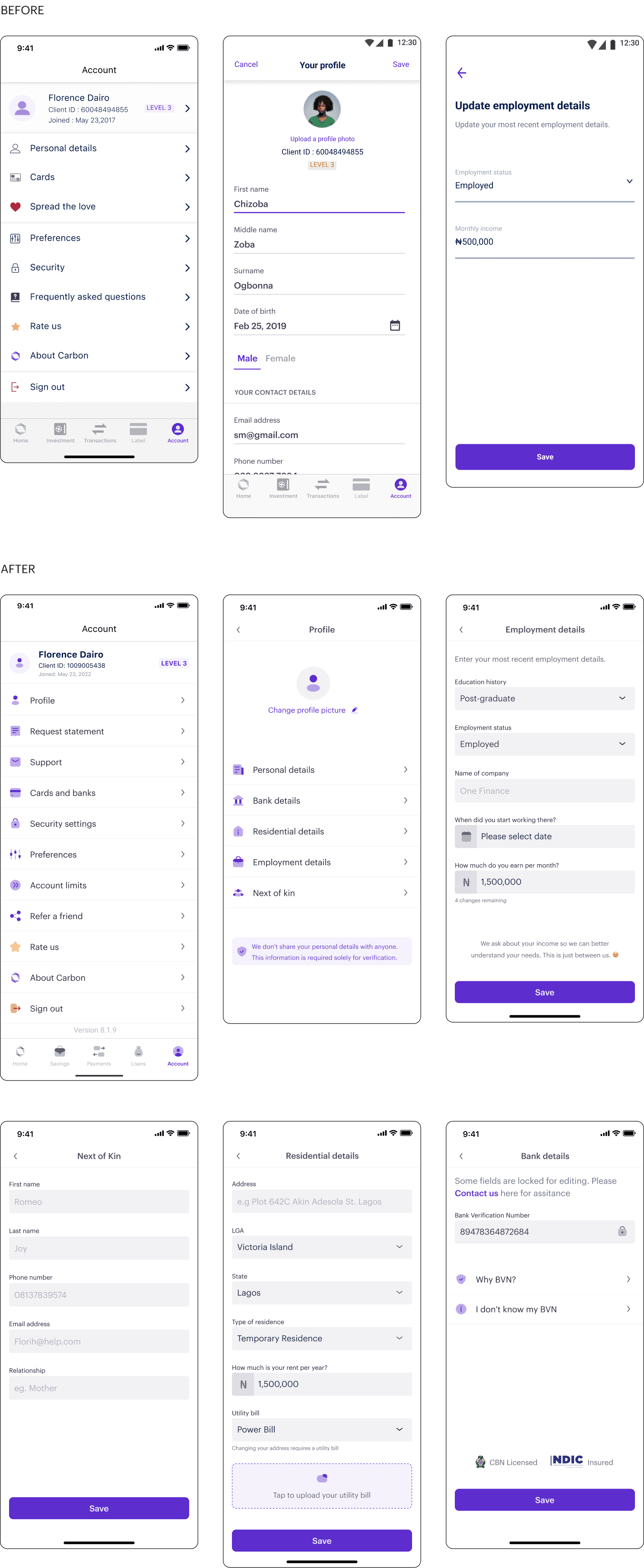
Existing screens do not conform with updated existing design system icons. Categorisation was also improved.
Improvements were made on android users experience as existing design required to scroll all the way down to fill certain KYC details.
Copies were also improved e.g users now get a brief side note on why we need their employment details.
A note was also added to build trust on the profile page educating users on why we require their personal details.
A lot of the design contributions are released in bits. Everything published in this case study has gone live as at this time. The Carbon app is available on iOS and Android Play Store for download.
Over 30% increase in sign up rate.
Android Play Store rating went from 3.9 to 4.3.
More organised design system practises and easier collaboration with the engineers.

